
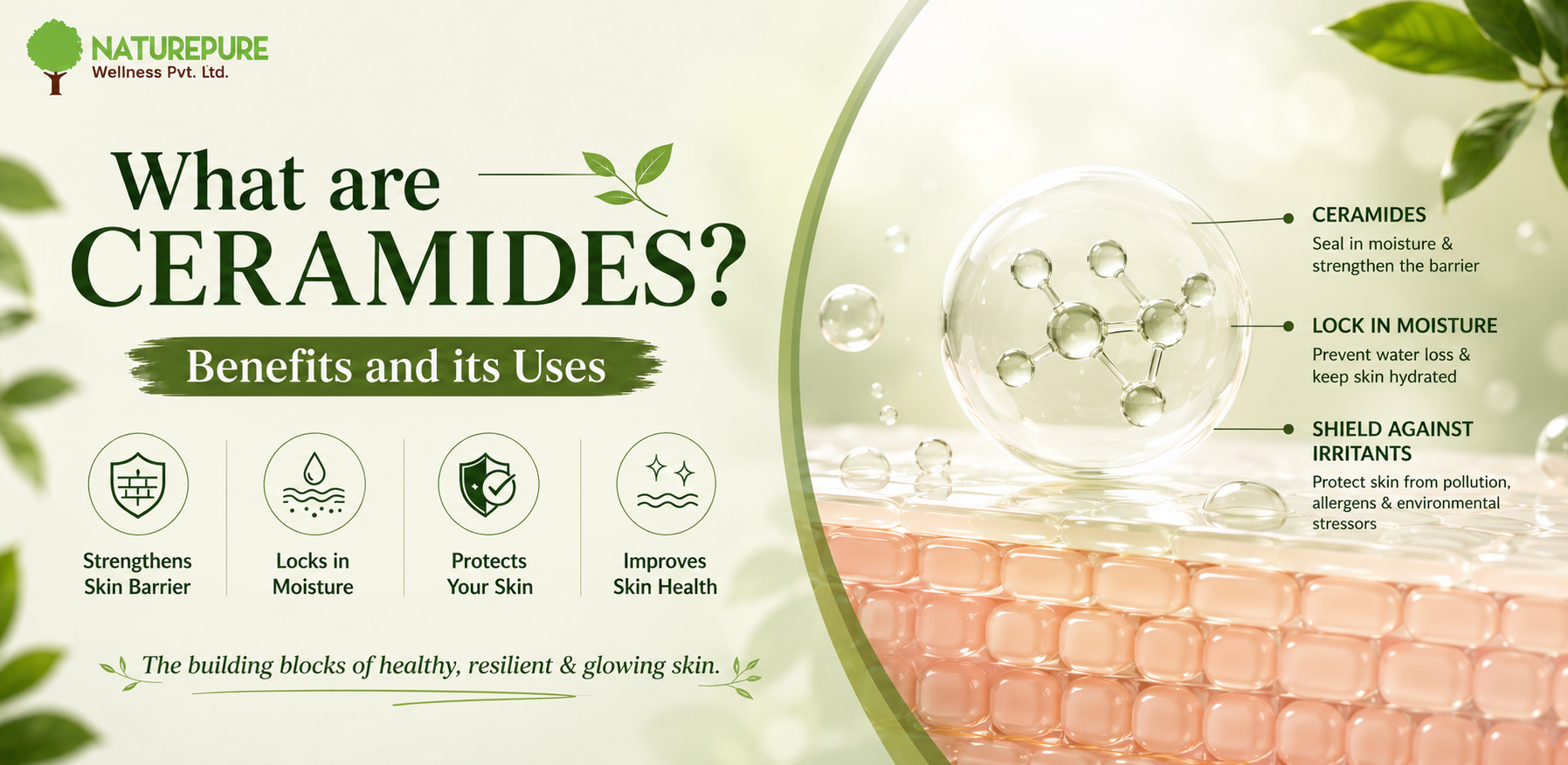
What are Ceramides? Benefits and their Uses
Ceramides are part of the skin barrier that protects your skin from getting tight, rough, and irritated. After cleaning, if you deal with any of these issues, like tightness or easily irritated skin, then it means your skin barrier is compromised. Ceramides are lipids (fats) that naturally occur in the outermost layer of the skin. It helps seal in moisture and keep pollutants/irritants out. It is necessary to understand what ceramides are and what they do for the skin. What are their key benefits, and how can you pick the right skin care routine that can help your skin stay healthy and glowing forever?
What are Ceramides
Ceramides make up more than 50% of the stratum corneum. Commonly known as the skin barrier. It is like waxy, long-chain molecules aligned under the skin to guard it against daily damage. To make it simple, think of it as the mortar between bricks that binds the bricks and keeps the wall firm. When ceramide levels are healthy, your skin will remain smooth, well-hydrated and flexible.
Ceramide levels are damaged due to over-exfoliation, dryness, cold weather, harsh cleaners and ageing. This can lead to dull tone and sensitive skin.
Types of Ceramides in Skin
You may have commonly seen different types of ceramides listed on skincare labels. Like Ceramide NP, AP, EOP, NG, NS, etc. Each one of these plays a vital role in keeping your skin healthy.
-
Ceramide NP/NS: It is a great all-rounder type that offers maximum hydration and comfort.
-
Ceramide AP: This one works on the smoothness of the skin and promotes flexibility.
-
Ceramide EOP: This supports barrier cohesion along with cholesterol and fatty acids.
Some skincare products are formulated with multiple ceramides + cholesterol, + fatty acids. This is done to balance the ratio and mimic the skin's natural lipid matrix. Which, in the long run, improves skin condition and delivers stronger results.
Ceramides Benefits for Skin
Here are some key benefits of ceramides and why they are important.
Replenishes your Skin Barrier
The core benefit of ceramides for skin is to repair the barrier. This barrier protects your skin from ageing and dullness. Replenishing these lipids helps to fill up tiny gaps on the outer layer of the skin. If they remain unsealed, skin loses water fast. And it also gets less irritated by environmental stress. If you are thinking, What does ceramide do to skin, then the simple answer is barrier support.
Locks in Moisture
Ceramides reduce transepidermal water loss. This further prevents your skin from dehydrating. This results in a soft texture, there will be some dry patches, and your skin will look plumper. Holding moisture in the skin is one of the key ceramide benefits for the face.
Helps protect your Skin
Having a healthy barrier means your skin will be less affected by irritants. Your skin can deal with pollution, harsh weather, etc. There will be no redness or damage. With time, skin resilience will increase. That is why ceramide use in daily routine has nowadays become a valuable practice.
How to Add Ceramides to Your Skin-Care Routine
Here are some simple methods by which you can add ceramides to your daily skin-care routine.
-
Cleanser: Cleansing is the first step in a skin care routine. You can start with a gentle cleanser. Look for cleansing milk that does not have harsh surfactants. This can strip your lipids and cause issues later on.
-
Moisturiser: Moisturiser locks up water in the skin. This prevents dryness and a flaky look. Always use a gentle moisturiser. Try finding one that has cholesterol and fatty acids. This will support the skin's natural mix, offering plump-looking skin.
-
Serum or Lotion: You can always add a ceramide serum to your skin care routine. Or you can use a lightweight moisturiser on damp skin to provide lipid supply when it is required.
It is best to go with a water-based essence or serum and then go for an emulsion or cream. If you are using face oil, use it last. By pairing ceramides with humectants and soothing agents, you can amplify ceramides for skin benefits.
What's the difference between natural and synthetic ceramides?
Here are some key differences between the types of ceramides. Both are effective; what matters is their overall formulation. If it is available in enough quantities, then you don’t really need synthetic support. But if your skin fails to generate it, then you use high-quality and pure synthetic ceramides to restore your skin barrier.
-
Natural Ceramides: Natural ones are skin-identical and structurally similar to those found in human skin. They can easily integrate and offer barrier repair.
-
Synthetic Ceramides: These are made in a lab where they copy the natural structure. High purity and stability are some core features of synthetic ceramides.

Do I Need Moisturizer in Summer?
Dehydrated Skin: Causes, Symptoms, and Treatment